
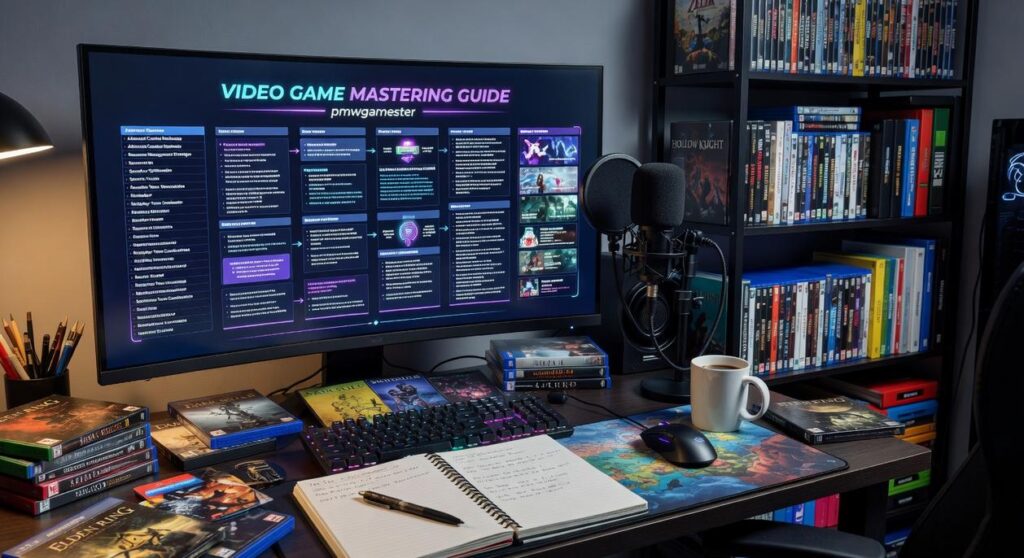
I’ve spent over a decade grinding through games at the competitive level and I can tell you this: most players practice wrong.
You’re probably stuck at the same rank you were six months ago. You play for hours but don’t see real improvement. That’s not a talent problem.
Here’s what separates players who break through from those who stay average: they follow a system. They don’t just play more. They practice smarter.
This video game mastering guide pmwgamester breaks down the exact framework I use to get better at any game. Not just one title. Any game.
I’ve tested these methods across multiple competitive scenes. I’ve watched them work for players in our community who were ready to quit because they felt stuck.
You’ll learn the practice techniques that actually move the needle. The strategic thinking that top players use. The mindset shifts that stop you from tilting and help you learn from losses.
No motivational fluff. Just the specific actions that take you from casual player to consistent winner.
This works whether you’re grinding ranked in a shooter, climbing ladder in a strategy game, or competing in fighting game tournaments.
The Champion’s Mindset: Rewiring Your Brain for Victory
You’ve seen it happen.
Two players with the same skill level. Same hours logged. Same equipment.
But one keeps climbing the ranks while the other stays stuck.
Some people say it’s just talent. You either have it or you don’t. They think champions are born, not made.
Here’s where they’re wrong.
I’ve watched thousands of players over the years. The ones who make it to the top? They think differently. Not smarter. Just different.
Growth Mindset vs Fixed Mindset
Fixed mindset players believe their abilities are set in stone. They lose a match and think “I’m just not good enough.” They see better players and assume those people were blessed with natural talent.
Growth mindset players see the same loss and ask “What can I learn from this?”
That’s it. That’s the difference that changes everything.
When you believe you can improve, you actually do. Your brain literally rewires itself when you practice with intention (neuroplasticity is real, and it’s working for you or against you right now).
Treating Losses Like Data
I don’t get frustrated when I lose anymore.
I get curious.
Every death, every missed play, every bad call is just information. The video game mastering guide pmwgamester approach taught me to ask better questions after a loss.
Not “Why am I so bad?” but “What specifically went wrong in that sequence?”
Did I peek too early? Miss a cooldown? Forget to check my minimap?
Write it down if you need to. I’m serious. Keep a simple log of what killed you or cost you the game. Patterns show up fast.
Staying Cool When It Matters
You know that feeling when you’re on a losing streak and your hands start shaking?
That’s tilt. And it kills more winning streaks than lack of skill ever will.
Here’s what works for me:
Take three deep breaths between matches. Sounds basic because it is. But your nervous system can’t tell the difference between game stress and real danger. Breathing resets that response.
Stand up and walk away for five minutes after two losses in a row. No exceptions.
(I used to think breaks were for weak players. Then I realized every pro takes them.)
Burnout is different. That’s when you stop caring about the game entirely. When logging in feels like a chore instead of something you want to do.
If you’re there, you need days off. Not hours. Days.
The game will still be there. Your rank will recover. Your passion won’t if you burn it out completely.
I schedule at least one full day per week away from competitive play. Sometimes I still game, just casual stuff. Sometimes I don’t touch a controller at all.
That space is what keeps me sharp when I come back.
Your mindset isn’t fixed. You can change how you think about improvement, failure, and pressure. Most players never bother to work on this part.
That’s your advantage right there.
Mastering the Machine: How to Practice Core Mechanics
You boot up your game and jump into ranked.
Again.
You tell yourself you’re practicing. But here’s what’s really happening. You’re just playing. And playing isn’t the same as getting better.
I see this all the time. Players put in hundreds of hours and wonder why their aim still feels shaky or why they can’t hit that combo when it counts.
The difference? Deliberate practice.
This isn’t about grinding matches. It’s about isolating one thing and drilling it until your hands move before your brain does. Think aim trainers like Kovaak’s for FPS players or spending 30 minutes in training mode working on that one fighting game combo you always drop.
Some people say you should just play more real matches. That game sense matters more than mechanics. And sure, game sense is important.
But you know what?
You can’t outthink someone who can simply execute better than you. When your mechanics fail under pressure, all that strategy falls apart.
Here’s how I break it down.
First, find your weak spot. Can’t last-hit minions in your MOBA? Miss shots because of recoil? Drop inputs during fast sequences? Pick one. Just one.
Then isolate it. Use custom games. Training modes. Whatever gets you away from the chaos of real matches where you’re trying to do everything at once.
Now here’s where it gets interesting.
Your brain is building pathways every time you repeat an action correctly (this is actual neuroscience, not motivational nonsense). Do it enough times and those conscious movements become reflexes. Your hands just know what to do.
That’s muscle memory. And it frees up your brain to think about positioning, reads, and all the high-level stuff that separates good players from great ones.
Pro tip: Set a timer for 15 minutes. Drill one skill. No distractions. Do this before you play ranked and watch what happens.
The video game mastering guide pmwgamester approach is simple. Practice like you mean it or don’t expect different results.
Your mechanics won’t fix themselves.
Playing Chess, Not Checkers: Developing Game Sense and Strategy
You can have perfect aim and still lose.
I see it all the time. Players with incredible mechanics who get stomped by someone with half their reaction speed. Why? Because they’re playing checkers while their opponent is playing chess.
Game sense separates good players from great ones.
Understanding the Meta
The metagame is what works right now. It’s the strategies, picks, and builds that dominate at high levels. And honestly? It changes faster than most of us can keep up with.
I watch pro matches and sometimes I can’t tell you exactly why a certain comp works. The interactions get complex. But I can tell you this: if three top teams are running the same setup, there’s probably something there.
Start with what the pros do. Watch their positioning. Notice which characters they prioritize and when they deviate from the standard builds.
(You don’t need to copy everything blindly, but you should understand what you’re choosing not to do.)
The Power of VOD Review
Recording your games feels weird at first. Watching them back? Even weirder.
But here’s what I found. You miss about 70% of your mistakes in the moment. Your brain is too busy trying to survive.
When you review footage, look for patterns. Did you die in the same spot three times? That’s not bad luck. That’s a positioning problem you need to fix.
Check your decision-making when you had time to think. Those moments reveal more than the chaotic teamfights where anything could happen.
Anticipating Your Opponent
Most players react. They see an ability and dodge it. They get pushed and fall back.
The best players? They make opponents react to them.
I’m still figuring this part out myself. Reading patterns is part experience and part educated guessing. Sometimes you bait an ability and they just don’t bite.
But once you start controlling space and forcing bad plays, the game opens up. You’re not just responding anymore. You’re dictating the pace.
The pmwgamester game mastering guide by playmyworld covers this shift from reactive to proactive play in more depth. Because honestly, it’s one of those concepts that clicks differently for everyone.
Start small. Pick one area of the map to control. Learn the timings. Force your opponent into uncomfortable positions.
That’s where real strategy begins.
The Pro’s Toolkit: Leveraging Community and Resources
You can’t get better in a vacuum.
I don’t care how many hours you grind solo. At some point, you need to tap into what the best players already know.
Here’s where most people mess up. They watch pro streams like it’s Netflix. Background noise while they scroll their phone.
That’s not learning. That’s just wasting time.
When I watch tournament broadcasts, I pause constantly. Why did they rotate there? What made them take that fight? The decisions matter more than the flashy plays.
A 2023 study from the University of York found that players who actively analyzed pro gameplay improved their rank 34% faster than those who just played more games (source: Computers in Human Behavior Reports).
Now some people argue that watching pros is pointless because you can’t replicate their mechanics anyway. They say you should just focus on your own gameplay.
But they’re missing the point. You’re not copying their aim. You’re learning their thought process. That’s what separates good players from stuck players.
Beyond streams, you need real feedback. Discord servers and subreddits built around your game are gold mines if you use them right. I’ve found practice partners who exposed weaknesses I didn’t even know I had.
The pmwgamester game mastering tips from playmyworld approach backs this up. Community engagement beats solo practice every time.
Then there’s the data side. Stat trackers show you the truth about your performance. Maybe you think you’re dying to bad luck, but the numbers show you’re out of position 70% of the time.
Here’s what actually works:
- Watch one pro match per week with a notebook
- Join one active community and actually participate
- Check your stats weekly using video game mastering guide pmwgamester methods
Track your rank over 30 days. The improvement speaks for itself.
Your Path to Mastery is Clear
You now have the complete framework.
Mindset, mechanics, strategy, and resources. Everything you need to systematically improve at any game you choose.
No more feeling stuck or relying on luck. That ends here.
This structured approach replaces aimless grinding with purposeful practice. You’re not hoping for results anymore. You’re building them.
I created video game mastering guide pmwgamester because I knew players needed more than tips and tricks. They needed a system that actually works.
Here’s what you do next: Pick one concept from this guide. Apply it in your next gaming session. Watch what happens when you practice with intention instead of just playing.
The difference between average players and masters isn’t talent. It’s method.
Your journey to mastery starts the moment you stop grinding and start training smart.
 At the heart of PMW Gamester is glowing_squire, a seasoned industry expert whose lifelong passion for gaming sparked the vision for this platform. Driven by a desire to bridge the gap between casual players and deep industry insights, glowing_squire founded PMW Gamester as a dedicated hub where the global gaming community can connect and stay ahead of the curve. With a keen eye for emerging trends and a commitment to authentic storytelling, glowing_squire continues to guide the site's mission: delivering the sharpest updates, freshest perspectives, and most impactful trends shaping the future of interactive entertainment.