
I’ve hit that wall where you’re good enough to win some matches but not good enough to dominate.
You know the feeling. You’re stuck between casual play and real competitive skill. You win against average players but get destroyed by anyone who knows what they’re doing.
Most guides tell you the same basic stuff you already know. This one doesn’t.
I’ve broken down what actually separates players who plateau from players who keep climbing. It’s not about playing more hours. It’s about playing smarter.
This guide covers the mechanics you’re probably ignoring, the strategies that top players use without thinking, and the practice routines that actually work. Not the ones that sound good but waste your time.
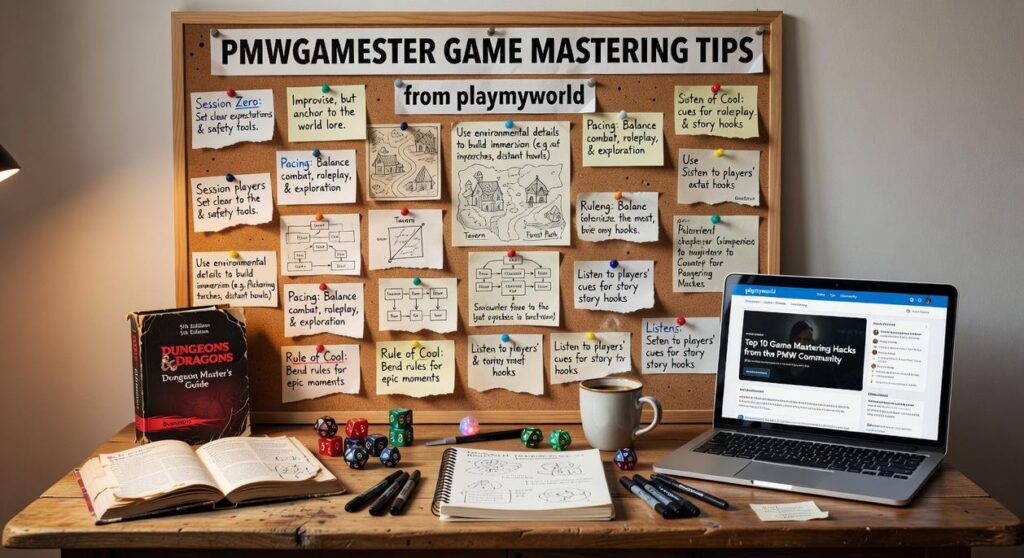
PMW Gamester game mastering tips from PlayMyWorld come from watching what works at the highest levels of play. We study esports matches, analyze winning patterns, and test techniques until we know what creates real improvement.
You’ll learn how to break through your current skill ceiling. How to read situations faster. How to execute under pressure.
No fluff about mindset or motivation. Just the technical skills and strategic thinking that will make you better.
The Foundation: Mastering Core Mechanics and Settings
Look, I don’t care how good your aim is.
If your settings are trash, you’re fighting uphill every single match.
I see players blame their gear all the time. They think a new mouse or keyboard will fix everything. But here’s what I’ve learned after years of competitive play: most people never even touch their settings after the first day.
That’s a mistake.
Optimizing Your Settings for Peak Performance
Your sensitivity needs to match your playstyle. Period.
I run lower sensitivity because I value precision over flashy flicks. Some pros will tell you high sensitivity is the only way to compete. They’re wrong. What matters is consistency.
Start with your keybinds. Put your most-used abilities on keys you can hit without thinking. I’ve seen too many players fumble crucial moments because they bound their ultimate to a key they can barely reach.
Graphics settings? Turn off the pretty stuff. I know it looks nice, but you need frames over eye candy. Drop shadows and post-processing first. Crank that frame rate as high as your system allows.
Audio is where most people sleep on free advantages. Good headphones help, but proper audio settings matter more. You should hear footsteps clearly and know exactly which direction they’re coming from.
(Seriously, if you can’t tell where enemies are by sound alone, fix that before anything else.)
A Deep Dive into Universal Game Mechanics
Here’s my take: mechanics beat strategy at lower levels.
You can have the best game sense in the world, but if you can’t execute basic movement, you’ll lose fights you should win. I learned this the hard way grinding through ranked.
Movement isn’t just about going fast. It’s about positioning yourself where you have options. Good players always have an escape route or angle to work with. Bad players run straight at problems.
Resource management separates decent players from great ones. You need to track your health, ammo, and cooldowns without thinking about it. When I’m in a fight, I already know if I can commit or if I need to back off based on what I have available.
But here’s where people really mess up.
They treat every game like team deathmatch. Kills don’t win matches. Objectives do. I’ve won games where my team had fewer eliminations because we actually played the objective while the other team chased stats.
The pmwgamester approach focuses on building these fundamentals first. You can’t skip this part and expect to compete at higher levels.
Pro tip: Spend one full session just working on movement. No shooting. Just practice positioning and map traversal until it feels natural.
Some coaches say you should focus on one mechanic at a time. I disagree. You need to practice everything together because that’s how real matches work. Isolating skills has its place, but integration matters more.
Master these foundations and everything else gets easier.
Advanced Strategy: Developing Elite Game Sense
You can aim like a god and still lose.
I see it all the time. Players with perfect mechanics who can’t read the game. They hit every shot but have no idea where to be or when to rotate.
Game sense separates good players from great ones.
Some coaches will tell you it just comes with time. Play enough matches and you’ll figure it out naturally. That’s partially true, but it’s also lazy advice.
You can speed up the process if you know what to look for.
Map Awareness and Strategic Positioning
Your mini-map isn’t decoration.
I watch players ignore it for 30 seconds at a time. Then they act surprised when three enemies show up from an angle they didn’t expect.
Reading the flow of the game means anticipating enemy rotations before they happen. You need to know the high-traffic areas on every map. Where teams usually push. Where they fall back when things go wrong.
High ground wins fights. (This isn’t just a meme from Star Wars.)
Learn the choke points. Understand which flanking routes actually work and which ones get you killed. Every map has a rhythm. Once you feel it, positioning becomes second nature.
The best gaming master pmwgamester players treat the mini-map like a radar. Constant glances. Always updating their mental picture of where everyone is.
Predicting and Outplaying Your Opponents
Players fall into patterns.
Low-rank players rush the same spots every round. Mid-rank players overthink and second-guess themselves. High-rank players get cocky and take fights they shouldn’t.
Once you recognize these tendencies, you can exploit them.
Baiting is an art form. You show yourself in a bad position. The enemy wastes their best ability trying to punish you. Then you’re gone and they’re vulnerable.
I call it conditioning. Make them expect one thing. Do it twice in a row. Then hit them with something completely different on the third attempt. Works every time.
The Psychology of Winning: Mental Fortitude
Tilt loses more games than bad aim ever will.
You make one mistake and suddenly you’re playing angry. Making worse decisions. Blaming teammates. I’ve done it. Everyone has.
The difference is how fast you reset.
When you’re behind, you need to identify your win conditions. What has to happen for you to come back? Focus your team on that one thing instead of trying to do everything at once.
Here’s what most players miss though.
Enemy teams get overconfident when they’re ahead. They take risks they wouldn’t normally take. They get sloppy with positioning because they think the game is already won.
That’s your opening. Stay composed. Wait for the mistake. Then punish it hard.
Practice with Purpose: Drills and Routines for Rapid Improvement
Aim Training and Reflex Drills
I’ll be honest. I used to think aim trainers were a waste of time.
Then I actually committed to using them for two weeks straight. My tracking improved by about 30% (and I felt pretty stupid for ignoring them so long).
Start with in-game training modes. They’re free and they mimic the exact mechanics you’ll use in real matches. Custom scenarios work too, but here’s what matters most: pick specific skills to work on.
Flick shots one day. Tracking the next.
You don’t need hours of practice. I’ve seen players improve with just 15 minutes daily. The key is showing up every single day, even when you don’t feel like it.
Here’s the part most people get wrong. They try to go fast right away. That’s backwards. Focus on hitting your target first. Speed comes later, once your muscle memory knows what precision feels like.
VOD Review: Your Most Powerful Coaching Tool
Watch your own replays.
I know it’s painful. Nobody likes seeing themselves make dumb mistakes. But this is where real improvement happens, and the video game mastering guide pmwgamester approach backs this up.
Look for patterns. Did you peek the same angle three times and die each time? Write that down.
Now here’s something I’m still figuring out myself. Sometimes when I review a lost fight, I can’t tell if I made the wrong call or just executed poorly. The line gets blurry. What helps is watching from your opponent’s POV when possible. You’ll see exactly what they saw and why your play didn’t work.
Keep a simple log. Just bullet points of what went wrong. Check it before your next session.
Learning from the Pros: Deconstructing Elite Gameplay
Watching pros is easy. Learning from them is different.
I used to watch streams for entertainment. Then I started watching with a notebook open. Game changed completely.
Pick one player per match. Watch only them. Ask yourself why they moved to that spot. Why they used that ability at that exact moment. Most of their decisions have reasons you’re probably missing.
The tricky part? Knowing which pro strategies actually work at your skill level. Some plays only work because their teammates know exactly what to do. I’m still learning which tactics translate and which don’t.
Copy their team compositions when you can. But focus more on their decision-making process. That’s what separates good players from great ones.
Staying Ahead: Understanding the Meta and Using Your Community
You want to climb ranks faster?
Stop playing in a vacuum.
I see players grinding for hours and wondering why they’re stuck at the same rank. They’ve got decent mechanics and they know their role. But they’re playing last patch’s game.
The meta shifts. Fast.
Some players say the meta doesn’t matter at lower ranks. They tell you to just focus on fundamentals and ignore what the pros are doing. And sure, if you can’t land your shots, tier lists won’t save you.
But here’s what that advice misses.
Understanding the meta isn’t about blindly copying pros. It’s about knowing what works right now so you’re not fighting uphill battles.
When you read patch notes, you spot which characters just got buffed. Which strategies got nerfed into the ground. You adapt before your opponents do (and trust me, that advantage is real).
Community discussions matter too. Forums and Discord servers are where players share what’s actually working. Not theory. Real results from real matches.
Here’s what staying connected gets you:
You learn counter-strategies before they become common knowledge. You find teammates who actually communicate. You build synergy with people who show up and practice coordinated plays.
Playing with randoms? You’re rolling the dice every match.
Regular teammates change everything. You develop callouts that make sense. You know who’s covering what angle. You stop losing rounds because nobody talked.
Check out pmwgamester game mastering tips from playmyworld for deeper breakdowns on team coordination and meta analysis.
The players who rise fastest aren’t always the most skilled. They’re the ones who know what’s strong and who they can count on.
Your Path to Mastery Begins Now
You came here stuck at a plateau.
I gave you the roadmap to break through it. The fundamentals, the strategy, the practice methods that actually work.
Breaking past your current skill ceiling feels impossible sometimes. But it’s not. You just needed the right approach.
Here’s the truth: mastery isn’t about talent. It’s about deliberate practice and showing up every day ready to improve.
Most players keep doing the same thing and wonder why nothing changes. You’re different now because you have a plan.
Pick one tip from this guide. Maybe it’s VOD review or an aim drill that caught your attention.
Dedicate your next session to that one thing. Master it before you move on.
PMW Gamester game mastering tips from PlayMyWorld work because they’re built on what actually moves the needle. Not theory or hype.
Your next session is where the journey starts. Make it count.
 At the heart of PMW Gamester is glowing_squire, a seasoned industry expert whose lifelong passion for gaming sparked the vision for this platform. Driven by a desire to bridge the gap between casual players and deep industry insights, glowing_squire founded PMW Gamester as a dedicated hub where the global gaming community can connect and stay ahead of the curve. With a keen eye for emerging trends and a commitment to authentic storytelling, glowing_squire continues to guide the site's mission: delivering the sharpest updates, freshest perspectives, and most impactful trends shaping the future of interactive entertainment.