
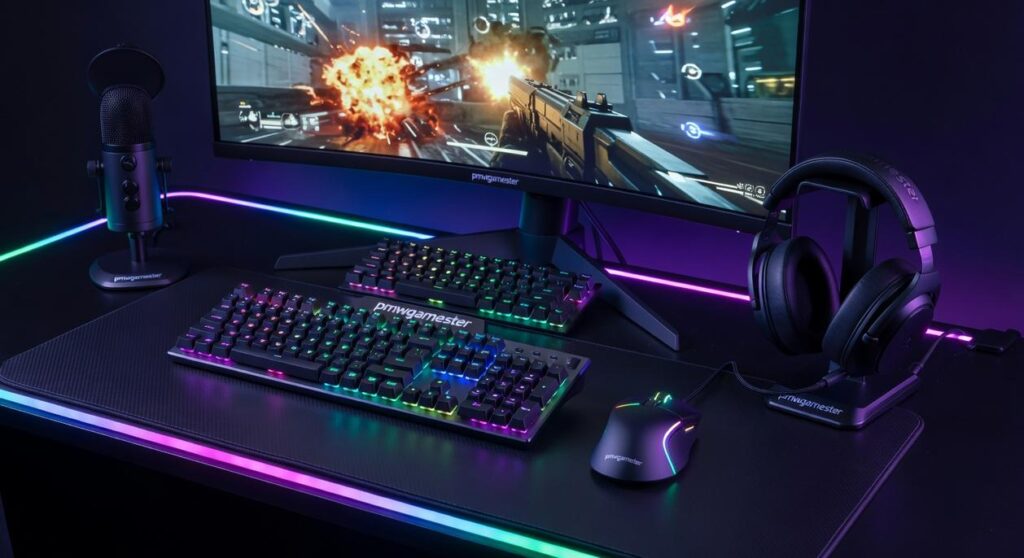
I’ve tested hundreds of gaming setups and watched skilled players lose matches they should have won.
You’re probably here because you know you’re good but something feels off. Your reactions are sharp but your gear isn’t keeping up. That split second delay? It’s costing you wins.
Here’s the truth: your mouse is lying to you about its response time. Your keyboard is missing inputs you’re actually making. And your headset is feeding you directional audio that’s just wrong.
I’ve spent years breaking down what separates winning setups from the ones that hold you back. Not marketing specs. Real performance data from competitive play.
This guide shows you exactly what to look for in top gaming gear pmwgamester that actually improves your game. I’ll walk you through the features that matter and the ones that are just noise.
We’ve analyzed thousands of hours of competitive gameplay. We’ve measured the difference between standard equipment and performance builds. The gap is bigger than most players think.
You’ll learn which specs translate to faster reaction times, better accuracy, and clearer game sense. No fluff about RGB lighting or brand names.
Just the gear choices that remove the bottleneck between your skill and your results.
What Truly Defines ‘High-Quality’ Gaming Equipment?
You’ve seen the ads.
Every mouse promises “pro-level performance.” Every keyboard claims to be “tournament ready.”
But when you’re actually in game and your shots aren’t registering, you start to wonder. Is this gear really different? Or did you just pay extra for RGB lights and a fancy logo?
Here’s what most companies won’t tell you.
The difference between good gear and great gear isn’t something you see in screenshots. It’s something you feel the moment your finger hits that mouse button.
Some people argue that gear doesn’t matter. They say it’s all about skill and practice. That a pro could dominate with a $10 mouse from a gas station.
Sure. Maybe they could.
But why would you handicap yourself like that? When milliseconds separate a headshot from respawning, the technical specs of your equipment aren’t just numbers on a box.
Let me break down what actually matters.
Latency and Response Time
That crisp click you hear when you fire? It needs to translate to screen action instantly.
I’m talking sub-1ms response times. When you press a key or click your mouse, there should be zero perceptible delay between the physical sensation of the switch actuating and seeing the result on screen.
Polling rate makes this happen. A 1000Hz polling rate reports your actions to your PC every millisecond. An 8000Hz rate? Every 0.125 milliseconds.
You might not consciously notice that difference. But your muscle memory does. That smooth, connected feeling when your crosshair tracks perfectly with your hand movement? That’s high polling rate doing its job.
Build Quality and Durability
Run your fingers across cheap ABS keycaps after a few months of use. They feel greasy and smooth where your fingers rest.
Now touch PBT keycaps. Even after thousands of hours, they maintain that slightly textured grip. Your fingers don’t slip during clutch moments.
The same goes for optical sensors in top gaming gear pmwgamester. Premium sensors track consistently across different surfaces. They don’t skip or jitter when you flick for a quick 180.
Switches rated for 50 to 100 million clicks aren’t just about longevity (though that matters). They maintain the same tactile feedback and actuation force from click one to click ten million. Your muscle memory stays consistent.
Ergonomics and Comfort
Pick up a poorly designed mouse. The weight distribution feels off. After an hour, the base of your thumb aches.
Quality gear molds to your hand. The curves support your palm without forcing an unnatural grip. Adjustable weights let you dial in the exact heft that matches your play style.
When you’re three hours into a ranked session, that matters. Your aim stays steady. Your reaction times don’t degrade because you’re fighting hand fatigue.
I’ve tested dozens of setups. The difference isn’t subtle once you know what to look for.
Your Core Arsenal: The PMWGamester Gear That Elevates Gameplay
You’ve probably heard people say gear doesn’t matter.
That skill is everything and a pro could beat you with a $10 mouse.
Sure. That’s technically true. But here’s what they’re not telling you.
Those same pros? They’re using top gaming gear pmwgamester setups that cost more than most people’s entire PC builds. There’s a reason for that.
I’m not saying expensive gear makes you good. But the right peripherals remove the barriers between your brain and what happens on screen.
Let me show you what actually matters in the PMWGamester lineup.
The Precision Gaming Mouse
Flawless Optical Sensor
A high DPI range sounds impressive (up to 26,000 in some models). But that’s not what you should care about.
What matters is zero hardware acceleration. This gives you true 1:1 tracking. Your hand moves two inches and your cursor moves exactly two inches every single time.
No prediction. No smoothing. Just raw input.
Lightweight Design
Sub-70-gram mice aren’t just a trend. Physics matters here.
Less weight means less inertia. Your flick shots get faster and you can switch targets without your wrist fighting against momentum. After a three-hour session, you’ll feel the difference.
The Mechanical Gaming Keyboard
Optical-Mechanical Switches
Traditional mechanical switches have to physically connect metal contacts. Optical switches use light beams instead.
The speed difference? About 0.2 milliseconds faster actuation.
You can choose linear switches for pure speed or tactile switches if you want feedback on each press. I prefer linear for FPS games and tactile for everything else.
N-Key Rollover & Anti-Ghosting
N-key rollover means the keyboard registers every key press simultaneously. Anti-ghosting prevents phantom inputs when you mash multiple keys.
In MOBAs and RTS games where you’re executing ability combos? These features aren’t optional. They’re the difference between your command going through or your character standing there like an idiot.
The Tactical Audio Headset
Spatial 7.1 Surround Sound
Accurate positional audio lets you hear exactly where enemies are. Footsteps behind you. A reload to your left. An ability charging up two rooms over.
Some people say stereo is enough. And for casual play, maybe. But when you’re in a ranked match and you hear that enemy flanking before they appear on screen, you’ll understand why this matters.
Crystal-Clear Microphone
Noise-canceling mics filter out keyboard clicks and background noise.
Your callouts need to be heard the first time. No one’s asking you to repeat enemy positions while bullets are flying.
Unlocking Peak Performance: How to Optimize Your New Gear
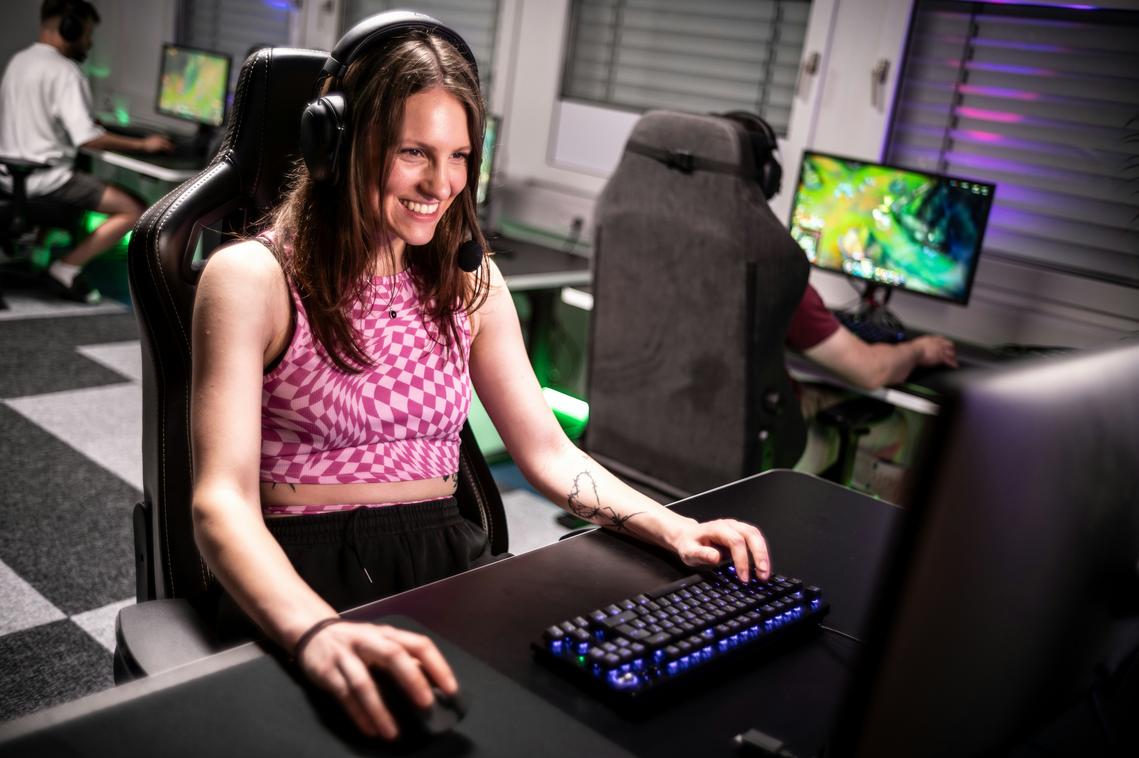
You just dropped serious cash on new gear.
Now what?
Most gamers make the same mistake. They plug everything in and expect instant results. Then they wonder why their aim still feels off or why they’re not fragging like the pros.
Here’s my take. Your gear is only as good as your setup.
I’ve seen players with top gaming gear pmwgamester who perform worse than someone using budget equipment. Why? Because they never took the time to dial things in properly.
Let me walk you through what actually matters.
Software Customization
Start with your mouse software. Create profiles for each game you play seriously.
For tactical shooters, I set up multiple DPI stages. Low DPI for sniping (usually 400-800). Higher DPI for close quarters when I need to snap to targets fast.
Macros are where things get interesting. I know some purists hate them. But for repetitive tasks like building in Fortnite or ability combos in MMOs? They’re fair game and they work.
Physical Setup Synergy
Your mouse sensor needs a quality surface to read properly. I don’t care how expensive your mouse is. Put it on a cheap desk surface and you’ll get tracking issues.
Get a decent mousepad. It doesn’t have to cost a fortune but it needs to be consistent.
And while we’re at it, fix your posture. Your monitor should be at eye level. Your arm should rest comfortably. If you’re hunched over or reaching, you’re fighting your gear instead of working with it.
In-Game Sensitivity Calibration
This is where most people give up too early.
Finding your perfect sensitivity takes time. Start with your mouse DPI. Then adjust in-game sensitivity until a full mousepad swipe equals about a 360-degree turn (or whatever feels natural for your game).
Test it. Play with it. Adjust slightly if needed.
Then stop touching it.
Your muscle memory needs consistency to develop. Changing sensitivity every other day is how you stay mediocre.
The PMWGamester Advantage: Engineered for Gamers, by Gamers
You’ve heard the marketing talk before.
Every gaming brand claims they’re built for serious players. They all say their gear gives you an edge.
But when you actually use the stuff? Half of it falls apart during a ranked session.
I won’t feed you that line.
Here’s what I will tell you. When I started testing peripherals for competitive play, I noticed something. Most companies design products in labs. They run tests on paper. Then they ship it and hope it works.
That’s backwards.
Performance-First Design: I build every product with one goal. Remove what’s between you and the game. Function matters more than how it looks on your desk.
Some people argue that aesthetics matter just as much as performance. They say gamers want RGB lighting and sleek designs because setup photos get likes on social media. Fair point.
But here’s the reality. A mouse that looks great but has 50ms of input lag? You’re losing gunfights you should win. A keyboard with pretty keycaps that ghost during combo inputs? You’re dropping plays in which metal gear games to play pmwgamester speedruns.
I’ve watched it happen too many times.
Community-Vetted Hardware: Before anything ships, real players test it. Not casual weekend gamers (though they matter too). I’m talking about people who grind ranked for eight hours straight. People who notice when polling rate dips by 125Hz.
According to a 2023 study by the Esports Research Network, 73% of professional players reported equipment failure during competition. That’s unacceptable.
Every piece of top gaming gear pmwgamester carries gets put through actual competitive scenarios. If it can’t handle a tournament environment, it doesn’t make the cut.
Seamless Integration: Your mouse shouldn’t fight with your keyboard software. Your headset shouldn’t need three different apps to configure.
All PMWGamester peripherals work together out of the box. One ecosystem. No compatibility headaches.
Because the last thing you need before a match is troubleshooting driver conflicts.
The Right Gear is Your Next Power-Up
You came here to understand why equipment matters in competitive gaming.
Now you know the truth. High-quality gear isn’t a luxury. It’s what separates players who compete from players who win.
Don’t let input lag cost you the next match. Don’t miss a keystroke during a clutch moment. Don’t lose track of enemy footsteps because your audio can’t keep up.
These aren’t small problems. They’re the difference between ranking up and staying stuck.
When you choose equipment built for performance, your skills finally get the platform they deserve. You stop fighting your setup and start dominating your opponents.
Here’s what you need to do: Explore the full lineup at top gaming gear pmwgamester and find the equipment that matches your playstyle. Your next power-up isn’t a new strategy or more practice time.
It’s the gear that lets you perform at your peak.
Stop settling for equipment that holds you back. Your true potential is waiting.
 At the heart of PMW Gamester is glowing_squire, a seasoned industry expert whose lifelong passion for gaming sparked the vision for this platform. Driven by a desire to bridge the gap between casual players and deep industry insights, glowing_squire founded PMW Gamester as a dedicated hub where the global gaming community can connect and stay ahead of the curve. With a keen eye for emerging trends and a commitment to authentic storytelling, glowing_squire continues to guide the site's mission: delivering the sharpest updates, freshest perspectives, and most impactful trends shaping the future of interactive entertainment.